
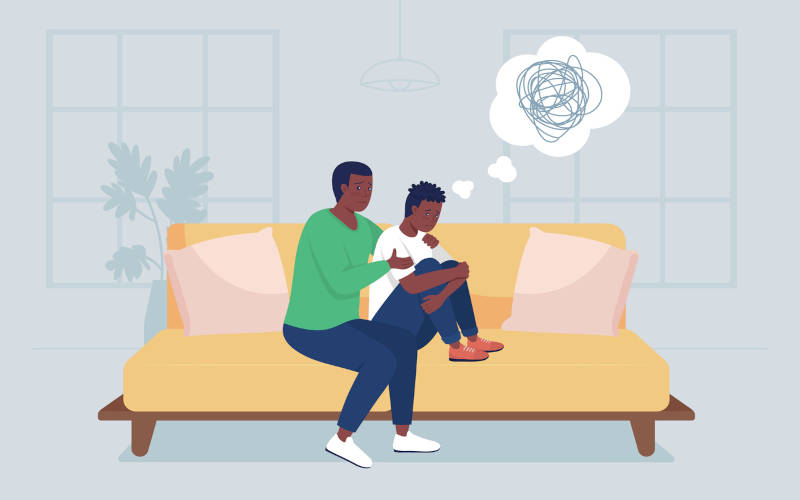
When a teenager is diagnosed with a mental health condition, the effects are often far-reaching. Parents, siblings, and the broader family all experience their own responses to what is happening, and those responses can reshape relationships in ways that families are rarely prepared for. The stress, uncertainty, and emotional weight of supporting a struggling teen are significant.
Research consistently shows that mental health conditions in adolescents affect the entire family system. Studies on parents of adolescents with depression report elevated rates of anxiety, depression, and caregiver burden in the adults providing care. Understanding how these effects ripple through a family is an important part of knowing when and how to seek help for everyone involved.
The Emotional Burden on Parents
Parents are usually the first to notice something is wrong with their teen, and often carry a disproportionate share of the emotional weight that follows. The experience of watching their child struggle with a mental health condition while trying to determine the appropriate response can produce anxiety and stress that accumulates over time.
Parents faced with this situation frequently describe feeling responsible for their teen’s condition, even when that sense of responsibility is not warranted. Guilt is common, as is a persistent sense that earlier intervention might have changed the outcome. These feelings tend to interfere with a parent’s ability to seek appropriate support for their teen as well as themselves.
Practical demands compound emotional ones as well. Navigating insurance, identifying treatment providers, managing school-related challenges, and coordinating care alongside work and other family responsibilities all create a sustained burden that many parents carry largely alone.
How Siblings Are Affected
Siblings of teens with mental health conditions are frequently overlooked in discussions of mental health impact. Their experience tends to receive less attention than that of parents, and they often receive less direct support. However, research indicates that the effects on siblings can be significant and lasting.
A study examining adolescents who grew up in the same household as a sibling with depression found that siblings commonly experienced grief, anxiety, loneliness, jealousy, anger, and guilt, as well as fears of being stigmatized by their peers. Siblings also frequently take on additional responsibilities within the household, which can affect their academic performance, social lives, and emotional development.
In addition to these feelings and pressures, the Association for Child and Adolescent Mental Health notes that siblings themselves experience a 2 to 4 times higher risk of developing a mental health condition. These trends show how vital it is for siblings to have their feelings and experiences taken seriously.
How Mental Health Challenges Affect Family Dynamics and Communication
Beyond the individual experiences of parents and siblings, mental health conditions in adolescents frequently change how a family works as a unit. Communication patterns can shift, routines may become organized around the teen’s needs, and other family relationships may receive less attention as a result.
Families often describe a shift in how conflict is managed within the household. Parents may become more cautious about raising concerns with their struggling teen. Siblings may feel that they cannot express their own frustrations without adding to the family’s stress. Marital and co-parenting relationships are also affected, as parents frequently disagree about the appropriate response to a teen’s behavior or the suitability of professional treatment.
Social Isolation and the Role of Stigma
Families supporting a teen with a mental health condition often experience a degree of social isolation. Parents may feel reluctant to discuss their teen’s condition with extended family, friends, or community members, both out of concern for their teen’s privacy and out of uncertainty about how others will respond.
Stigma surrounding mental health conditions remains a significant barrier for families as well as individuals. Research on siblings found that a fear of being labeled as socially deviant or of stigma being assigned to the family as a whole leads family members to conceal their situation from those around them. This can cut family members off from social support at a time when it is often critical.
This isolation can be particularly difficult for parents who feel that their peers cannot understand what they are going through. Families who participate in treatment programs often find that connecting with other families in comparable situations is among the most meaningful aspects of their involvement.
Why the Family’s Experience Matters for a Teen’s Recovery
The emotional state of the family is directly connected to a teen’s mental health recovery. Teens who return from treatment to a household with elevated tension, poor communication, or parents managing significant anxiety face additional challenges in sustaining progress. One study found that adolescents who experienced less parent-child conflict were significantly more likely to benefit from treatment than their counterparts. It also found that therapy was less effective among teens reporting poorer family environments.
A healthy family environment is a key foundation for mental health recovery. When parents and siblings receive appropriate support alongside the teen in treatment, the conditions for recovery improve for everyone.
Family Support in Teen Mental Health Treatment
Effective adolescent mental health treatment incorporates family support as a standard component rather than an add-on. This includes providing parents with education about their teen’s condition, guidance on how to be supportive at home, and tools for improving communication within the family.
At Pillars Adolescent, our teen intensive outpatient programs are designed with the understanding that a teen’s mental health exists within a family context. We employ evidence-based therapeutic approaches, including cognitive-behavioral therapy (CBT) and dialectical behavior therapy (DBT), that help teens develop the skills needed to manage their condition and build healthier relationships within and outside of their family situation.
Our Full-Day Teen Outpatient Treatment Program and Half-Day Teen Outpatient Treatment Program both ensure that family members and parents can be involved in their teen’s treatment plan. We can also connect parents and families with supportive services to help them maintain progress and recovery post-treatment.
Taking the Next Step Toward Recovery as a Family
If a teen in your family is struggling with a mental health condition, the effects on the rest of the family should also be taken seriously. Parents and siblings experiencing significant stress, anxiety, or changes in their own functioning may benefit from professional support alongside the teen receiving care.
Take the first step toward healing and well-being. Contact Pillars Adolescent today at 855-828-0575 for compassionate support, personalized care, and answers to your questions.