
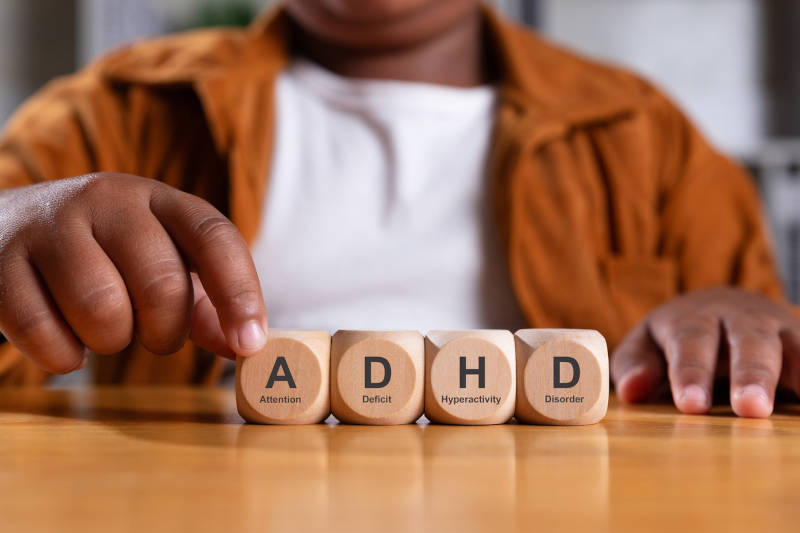
Most teenagers occasionally lose focus, forget an assignment, or act before thinking things through. However, for some teens, these are constant struggles that shape nearly every part of daily life. What may look like laziness or carelessness on the surface is often something far more complex happening deeper.
With 1 in 9 children in the United States having received a diagnosis, attention-deficit/hyperactivity disorder (ADHD) is one of the most common mental health conditions affecting adolescents. With its impacts on executive function and emotional regulation, ADHD can reshape how a teen learns, connects with others, and moves through everyday life.
Defining Adolescent ADHD
The National Institute of Mental Health (NIMH) describes ADHD as a developmental disorder marked by an ongoing pattern of one or more groups of symptoms:
- Inattention, difficulty keeping on task, or staying organized
- Hyperactivity, such as moving around often (including during inappropriate times), feeling restless, or talking excessively
- Impulsivity, such as interrupting, intruding on others, or having trouble waiting one’s turn
NIMH notes that while most teens experience some level of these symptoms, teens with ADHD exhibit these characteristics persistently across multiple areas of life. These qualities can present significant challenges to a teen’s organization, emotional control, time management, and motivation.
Depending on the presentation of an individual’s symptoms, NIMH writes, there are three types of ADHD one can exhibit:
- Inattentive: Mostly symptoms of inattention, but not hyperactivity or impulsivity
- Hyperactive-impulsive: Mostly symptoms of hyperactivity and impulsivity, but not inattention
- Combined: Symptoms of both inattention, hyperactivity, and impulsivity
Adolescent ADHD typically presents as restlessness more often than hyperactivity, although this is not always the case. NIMH notes that teens continually face challenges of inattentive and impulsive behaviors, including a greater chance of exhibiting risky behaviors like substance use.
Why ADHD Symptoms Intensify During the Teen Years
Adolescence brings a sharp increase in independence and responsibility. In particular, school pressure, peer relationships, and hormonal changes all present unique challenges to teens with ADHD. These challenges demand new levels of organization and emotional control, all of which ADHD can impact at a deep level.
Many of the more pronounced struggles in teens relate to executive functioning. Executive functioning refers to the brain’s ability to prioritize and manage thoughts and actions, foresee consequences, plan, and adjust course when needed. The skills adolescence demands most, like managing a schedule or regulating emotions under pressure, are often the skills that ADHD makes most difficult to develop.
How Teen ADHD Affects School Performance
For many teens with ADHD, school is where symptoms become most visible and costly. Research has shown that adolescents with ADHD fail more grades and perform worse on tests when compared with their peers. Difficulty sustaining attention can lead to missed instructions, incomplete assignments, and mistakes on tests. Even when a teen understands the academic material, ADHD can make it difficult to filter out distractions long enough to engage with it.
Over time, ADHD’s impacts on memory and focus can lead teens to believe that they aren’t smart enough to succeed. Struggles with time management and organization can compound this. Small setbacks can erode a teen’s confidence and contribute to falling grades, disciplinary issues, or growing anxiety about performance. Teachers and parents may misread these patterns as a lack of effort when they are, in fact, symptoms of a treatable condition.
How Teen ADHD Impacts Relationships
ADHD often extends beyond the classroom and into a teen’s closest relationships. At home, impulsivity and difficulty following through on responsibilities can create ongoing friction. Research shows that adolescents with ADHD tend to experience more conflict with their parents when compared to their peers. Parents can feel they must repeatedly correct or supervise their teen, while teens may feel micromanaged or misunderstood, straining trust and patience on both sides.
ADHD can also impact a teen’s relationships with their peers. Impulsive comments, difficulty picking up on social cues, or trouble regulating emotions in the moment can make friendships harder to build and maintain. The same holds true for organizing or managing commitments or outings with friends. Repeated social missteps, even unintentional ones, can lead to feelings of rejection or isolation that compound the challenges ADHD presents.
Teen ADHD in Daily Life
Beyond school and relationships, ADHD can shape the basic rhythms of a teen’s day. Getting out the door in the morning or managing an extracurricular schedule can become a significant source of ongoing stress. Tasks that seem simple to others can require far more mental effort for a teen with ADHD.
Difficulties with emotional regulation can make daily life challenging as well. The organization Children and Adults with Attention-Deficit/Hyperactivity Disorder (CHADD) notes that many teens with ADHD experience emotions more intensely and have a harder time calming down once frustrated or overwhelmed. This can lead to outbursts that feel disproportionate to the situation, followed by guilt or embarrassment once the moment has passed.
Professional Treatment Options for Adolescent ADHD
Professional treatment for adolescents with ADHD can help teens manage their symptoms and overcome the challenges posed by the condition. The Centers for Disease Control (CDC) notes that treatment typically involves a mixture of behavior therapy and medication, as needed, depending on an individual’s presentation.
Behavioral approaches can help teens build the organizational, planning, and self-regulation skills that ADHD can make difficult to develop naturally. Psychosocial approaches, like group or cognitive-behavioral therapy, address the anxiety, low self-esteem, or negative thought patterns that can develop alongside ADHD after years of academic or social struggle.
Medication is often part of an effective treatment plan as well. Because each individual with ADHD is unique, treatment strategies that combine medication and non-drug options should be tailored to fit their specific needs. A medical professional can help determine whether a stimulant or non-stimulant medication is appropriate.
How ADHD Is Treated at Pillars Adolescent in Concord, Massachusetts
At Pillars Adolescent, we understand how deeply ADHD can affect a teen’s school performance, relationships, and daily functioning. We help teens and their families overcome these challenges through our teen outpatient treatment programs, offered at 80-1 Beharrell St, Concord, Massachusetts.
Our Full-Day Teen Outpatient Treatment Program provides intensive, structured therapeutic support for struggling teens who need a high level of support while remaining connected to their families and home environments. For adolescents who can benefit from treatment with greater scheduling flexibility, our Half-Day Teen Outpatient Treatment Program supports mental health recovery and builds the skills teens need to move forward.
Our clinical teams use evidence-based approaches, including cognitive-behavioral and dialectical behavior therapy, to help teens build confidence and self-esteem. We guide teens as they develop the focus, organization, and emotional regulation skills to manage ADHD and find long-term success. Therapeutic sessions take place across both individual and group settings, ensuring that skills transfer to the situations that teens navigate every day.
Overcoming the Challenges Posed by Teen ADHD
ADHD presents numerous challenges for teens as they grow, especially when it intersects with mental health conditions like depression or anxiety. But ADHD does not have to limit a teen’s academic performance, relationships, or self-esteem.
With professional treatment and support, teens with ADHD can develop strategies to manage their symptoms and find confidence across every area of their daily lives.
Take the first step toward healing and happiness for your teen and your family. Contact Pillars Adolescent today at 855-828-0575 for compassionate support, personalized care, and answers to your questions.